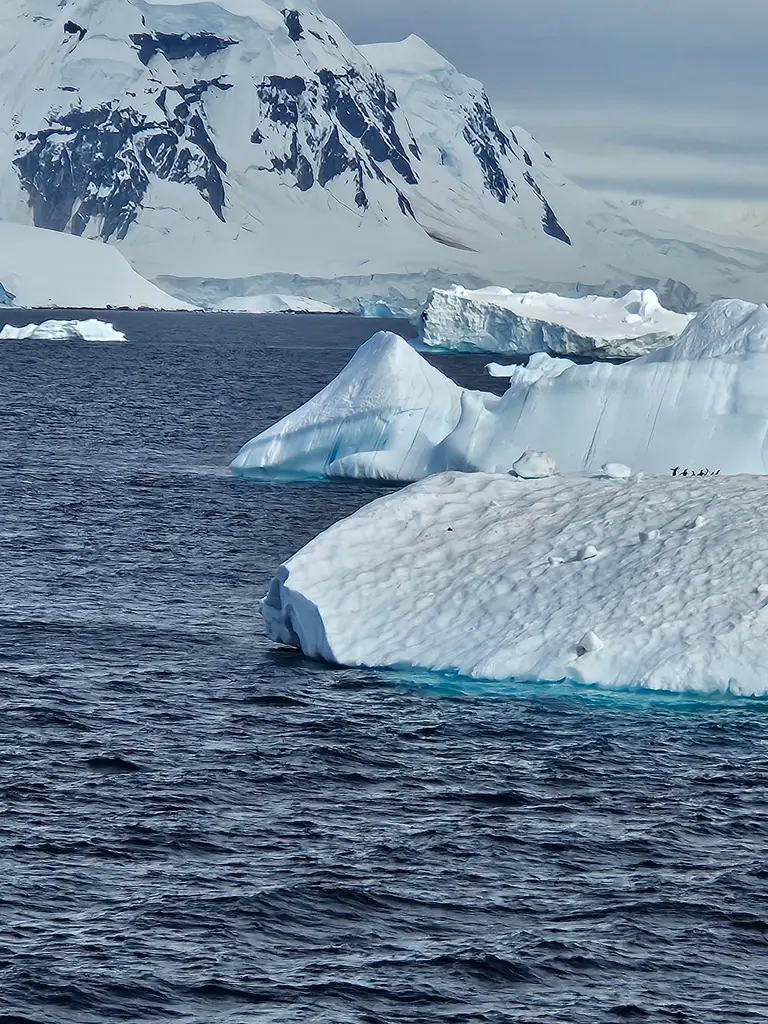
The first thing I would tell anyone planning an Antarctica cruise first time is this: the ship gets you there, but it is not the point. You are going for the sharp silence after the Zodiac engine cuts out, the sound of ice cracking in a bay, and the odd realization that penguins really do have the right of way. It is a big-ticket trip, often a long journey from Mexico or the United States, and it deserves more thought than simply choosing the lowest fare.
Antarctica is also more physically demanding and less predictable than a typical cruise. That is part of its appeal. You can prepare well, choose the right itinerary and ship, and still have to accept that wind, ice, and sea conditions have the final word. My own personal experience was on a cruise ship and it was still the most awesome place that I have ever been. Although you do not get the Zodiac experience, it is still a worthwhile trip, especially stopping at the Falkland Islands.
Antarctica Cruise First Time: Start With the Itinerary
For most first-timers, the classic Antarctica Peninsula itinerary is the sensible choice. These voyages generally sail round-trip from Buenos Aires or Ushuaia, Argentina, and last about 10 to 14 nights. The route crosses the Drake Passage, spends several days around the Antarctic Peninsula and nearby islands, then returns across the Drake.
This is the trip I would prioritize if seeing Antarctica itself is your main goal. You get the best balance of travel time, wildlife encounters, iceberg scenery, and chances to go ashore. Longer sailings that include South Georgia and the Falkland Islands can be extraordinary, especially for serious wildlife lovers, but they require more time and a significantly larger budget.
The Drake Passage Is Real, but Not Always Terrible
The Drake Passage has a fearsome reputation for good reason. On a rough crossing, the ship can pitch, corridors become obstacle courses, and a full day in bed can sound like a wonderful plan. On a calm crossing, it can be surprisingly manageable. You do not know which version you will get. I was lucky enough that both ways were very calm. As a matter of fact one of our scientists on board told us he has been to Antarctic over 100 times, and has never seen such calm waters!
Bring motion-sickness medication you know works for you, and speak to your doctor before the trip if you need prescription options. Start taking your preferred medication before the sea gets rough, not after you feel sick. A midship cabin on a lower deck usually feels the least movement, although cabin location should not outweigh every other part of your decision.
Do not let the Drake dominate your planning. It is roughly two days each way on many routes, while the reward is the White Continent. Think of it as the price of admission, not the whole experience.
Choose the Ship for Landings, Not Just the Cabin
The most useful question is not, “Which ship has the nicest suite?” It is, “How much time will I realistically spend outside?” Expedition ships are designed around Zodiac cruising and landings, while larger ships may offer more restaurants, entertainment, and cabin choices but can have operational limitations. But their provide a wonderful experience in the places like Elephant Bay.
Antarctic visitor rules limit how many people may be ashore at one time. On a smaller expedition ship, nearly everyone can usually land together. On a larger vessel, guests may rotate through landing groups. That does not make a bigger ship a bad choice. Some travelers value a balcony, more dining variety, a gym, or a more familiar cruise experience. Just understand that comfort at sea can come with less time on the beach with the penguins.
I would also look closely at the expedition team. A good team changes the feeling of the voyage. Naturalists, historians, photographers, marine biologists, and veteran guides turn a beautiful landing into a place with a story. Even on the larger cruise ship, we had 4 scientists with multiple lectures and included a Penguins expert. Their lectures also make sea days more interesting, particularly when the weather keeps everyone indoors.
Cabin categories deserve a practical look. A window is nice, but you do not need a premium suite to experience Antarctica properly. You will spend your best hours on deck, in the lounge watching for whales. Put money toward the itinerary, the expedition program, and travel insurance before stretching for the most elaborate cabin.
Expect Plans to Change Every Day
A printed Antarctic itinerary is an intention, not a promise. The captain and expedition leader may change landing sites due to wind, swell, sea ice, or wildlife protection requirements. You might wake up expecting one island and find the ship headed somewhere else entirely.
That flexibility is one of the defining features of expedition travel. The best travelers on board are not the ones who insist on checking off a particular location. They are the ones who bring a camera to breakfast because a group of whales or penguins has appeared outside, or who are happy to Zodiac cruise among sculpted ice when a landing is not safe.
This is why I would be cautious about booking an Antarctica trip around one specific image seen online. You may see towering tabular icebergs, snow-covered mountains, seals sleeping beside a landing path, and huge penguin colonies. You may not see the exact scene from someone else’s voyage. Antarctica does not perform on demand.
What to Pack for Antarctic Landings
Most expedition lines provide waterproof boots, and many include a warm outer parka. Confirm this before buying anything. The key is not an enormous pile of heavy clothing. It is a flexible layering system that keeps you dry, warm, and comfortable while moving between a heated ship, windy Zodiac rides, and snowy shore landings. I would expect day time highs to be at freezing on a good day.
Pack merino or synthetic base layers, an insulating midlayer, waterproof pants if they are not provided, warm socks, gloves, a hat that covers your ears, and sunglasses with good UV protection. Bring a spare pair of gloves. Gloves get wet, and cold fingers can quickly shorten your enjoyment of a landing.
A small dry bag is worthwhile for your camera, phone, and extra layer during Zodiac rides. If photography matters to you, keep your setup simple enough to use with gloves. Antarctica moves quickly: a whale surfaces once, a penguin jumps from the water, the light changes across an iceberg. A camera you can operate is better than a complicated kit that stays in the cabin.
Wildlife Is Close, but You Are Still a Guest
The wildlife can feel almost unreal because many animals show little fear of people. A penguin may waddle directly toward you. A seal may be sleeping only a few yards from a marked path. That does not mean you should approach, touch, feed, or block them for a photograph. While in the Falklands, I had the best experience seeing several different types of penguins just a few feet apart.
Listen to the guides, stay within designated areas, and let the animals decide the distance. The most memorable moments often come when you stand still and wait. You notice the different sounds in a penguin colony, the way a fur seal watches the shoreline, or the quiet rhythm of snow falling around you.
There is also a less glamorous side: penguin colonies smell strongly, weather can be wet, and getting into a Zodiac takes a little coordination. None of that reduces the experience. It makes it feel real.
Going Solo on an Antarctica Cruise
Antarctica is one of the better big trips to take alone. Expedition cruising gives you built-in company without requiring you to be “on” all day. You will naturally meet people during briefings, meals, Zodiac rides, lectures, and while standing outside together in the cold watching for wildlife.
The biggest financial hurdle is the single supplement. Some ships have dedicated solo cabins or occasional reduced supplements, but availability can be limited. If budget matters, compare the total single occupancy cost rather than focusing on the advertised per-person fare. A cheaper sailing with a high supplement is not always cheaper.
As a solo traveler, I would choose a ship with open seating and a strong expedition program over one built mainly around formal dining or nightlife. You can join others easily, but you can also take a quiet moment on deck without feeling out of place. You can absolutely do this trip alone.
Getting There From Mexico Takes Planning
For travelers starting in Mexico, the usual challenge is building enough buffer before an Ushuaia sailing. Flights commonly route through Mexico City and then Buenos Aires or Santiago, followed by a domestic connection to Ushuaia. It is a long journey with several points where delays can happen. The larger cruise ships leave from Buenos Aires and provide you with several ports of call before you get to Ushuaia, a worthwhile experience to see the Chilean Fjords.
Arrive in Ushuaia at least two nights before embarkation if your schedule allows. One night is the minimum I would consider, particularly if you are traveling on separate tickets. The extra time protects your cruise investment and gives you a chance to enjoy a genuinely attractive Patagonian town rather than seeing only its airport and port.
Build the same caution into your trip home. Weather, charter flights, and ship timing can all shift. Avoid a nonrefundable long-haul flight on the same day you disembark. Antarctica rewards travelers who leave room for reality.
The right first Antarctica cruise is not necessarily the longest sailing, the newest ship, or the most expensive cabin. It is the one that gives you enough time to land, enough flexibility to adapt, and enough breathing room in your travel plans to be present when the continent finally appears on the horizon.

Leave a Reply