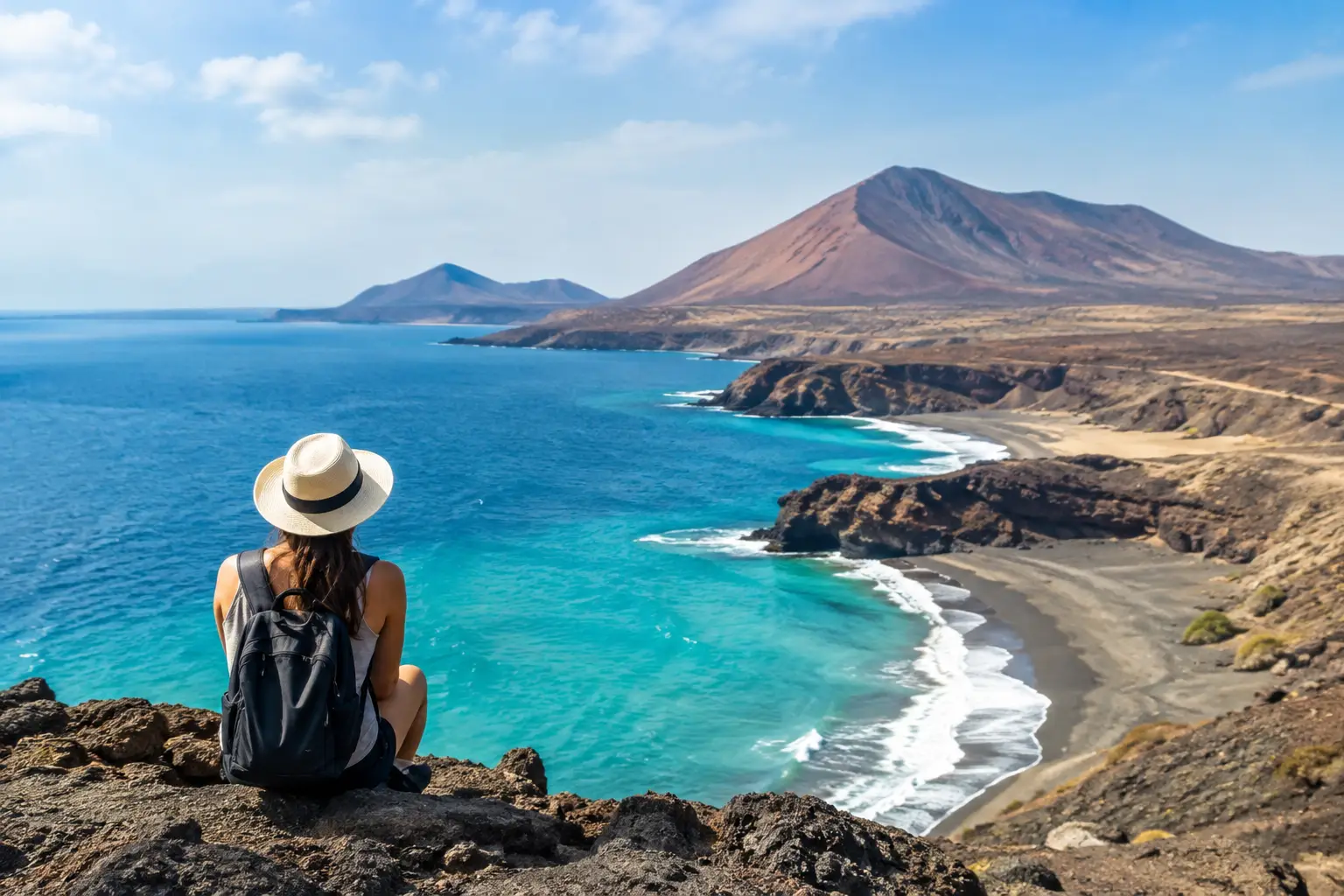
The first thing Lanzarote does is challenge your idea of a beach vacation. Ten minutes after landing, you can be looking at black lava fields, low whitewashed villages, and volcanic cones that seem to belong on another planet. If you searched for “lazarotte, canary island,” the spelling you want is Lanzarote, and this is the Canary Island for travelers who want more than a resort wristband and a pool view.
I would put Lanzarote high on the list for independent travelers who like to rent a car, set their own pace, and mix comfortable hotels with genuinely memorable landscapes. It is not the greenest or most conventionally tropical of the Canaries. The wind can be relentless, the coast can be rough, and some resort areas feel built for British package holidays. But the island’s volcanic character, excellent roads, and manageable size make it unusually rewarding for a first self-led trip.
If you happen to be a volcano fanatic, all the better! With its history of having 316 different volcanoes dotted across the landscape, it is also the home still one active one located within the Timafaya National Park.
Why Lanzarote, Canary Island Feels So Different
Lanzarote is the easternmost major Canary Island, closer to the African coast than mainland Spain. Its defining event was a series of huge eruptions between 1730 and 1736, which covered a large part of the island in lava and ash. The result is not subtle: broad black-and-russet fields, craters, lava tubes, and vineyards planted in improbable semicircles of volcanic soil.
This is why a week here works better when you think of it as a road-trip destination with beaches, rather than only a beach destination. You can swim in the morning, drive through Timanfaya’s lava landscape after lunch, and have dinner in a quiet inland town before sunset. The distances are short enough that you rarely feel trapped in transit.
Lanzarote also has a strong visual identity thanks to local artist and architect César Manrique. His influence helped preserve the island’s low-rise, whitewashed look and created some of its most distinctive visitor sites. Even travelers who do not care much about architecture usually notice the difference. There are far fewer towering hotel blocks than you might expect in a year-round sun destination.
Choose Your Base Before Booking a Hotel
Where you stay will shape the entire trip. Lanzarote is compact, but the experience in each area is quite different.
Puerto del Carmen is the practical choice for a first visit. It is close to the airport, has a long sandy beach, plenty of restaurants, supermarkets, and accommodation at many price points. The older harbor area has more character than the newer strip, though it is still busy and tourist-oriented. If you want easy evenings and do not want to drive every night, it makes sense.
Playa Blanca, in the south, feels more polished and relaxed. It has a marina, family-friendly beaches, and convenient access to the Papagayo area. The trade-off is that it can feel more self-contained, especially if you stay at a large resort. I would choose it for a quieter hotel break, not as the only base for someone determined to explore every corner of the island.
Costa Teguise is another established resort area, particularly convenient for windsurfing and for reaching northern attractions. It is functional rather than atmospheric, but that is not necessarily a criticism. For solo travelers who prefer a well-lit, straightforward base with restaurants nearby, its ease has value.
For a more local-feeling stay, look at Arrecife, the capital, or inland towns around Teguise. Arrecife is not as pretty as the resort towns, but it offers everyday island life, a waterfront, and better access to public transportation. Inland accommodation can be lovely, although having a car becomes much more important.
Rent a Car and Let the Island Open Up
Lanzarote is one of those places where a rental car changes the trip completely. The main roads are generally easy to drive, well maintained, and far less stressful than those in many Mediterranean islands. Navigation is simple, and most major sights can be reached within an hour from Puerto del Carmen.
A small car is enough. You do not need an SUV for the standard attractions, and a compact vehicle is easier in village streets and hotel parking lots. Check the fuel policy, take photos at pickup, and be realistic about insurance. Volcanic gravel and tight parking spaces are ordinary travel inconveniences, not reasons to overpay blindly for every add-on at the desk.
If you do not drive, Lanzarote is still possible, but you will need more patience. Buses connect the main population centers, while guided excursions can cover Timanfaya and selected northern sights. The limitation is flexibility. You may see the headline attractions, but you will miss the pleasure of stopping at a quiet viewpoint or changing plans when the light turns spectacular late in the day.
The volcanic south and Timanfaya
Timanfaya National Park is the essential Lanzarote experience. The protected landscape is tightly managed, so visitors generally follow designated routes rather than hiking freely across the lava fields. That can feel restrictive if you are used to national parks in the United States, but the controls protect a fragile environment that can be damaged easily. They only allow busses to travel the road through the lava fields and it is an experience, very lunar like and a must!
Go early if possible, especially in peak season. The park’s organized route reveals an extraordinary terrain of volcanic slopes, dark plains, and red-brown cones. It is dramatic even on an overcast day, perhaps more so. Pair it with a drive through La Geria, where vines sit individually in shallow pits behind curved stone walls built to shelter them from the wind. It is one of the most unusual wine landscapes I have seen in Europe. There are surprising quality of wineries located here and their unique way of growing their vines in protected “forts” is a worthy site.
The north: lava tubes, cliffs, and quieter roads
The north of Lanzarote deserves at least one full day. Jameos del Agua and Cueva de los Verdes are lava-tube sites that show how inventive Manrique could be when working with the island’s geology. They are popular for good reason, so accept that you will not have them to yourself.
Continue toward Haría, a green valley by Lanzarote standards, then make time for Mirador del Río. The viewpoint looks across the narrow channel toward La Graciosa, a small island that feels strikingly remote from above. On a clear day, this is a stop that earns its place on any first itinerary.
Beaches: Pick the Right One for the Day
Not every Lanzarote beach is made for calm swimming. The Atlantic can be chilly even in warmer months, and the wind affects conditions quickly. This is part of the island’s personality, but it is worth setting expectations before you picture long, lazy days in glassy turquoise water.
For classic sand and an easy swim, Playa Grande in Puerto del Carmen and the beaches around Playa Blanca are dependable choices. Papagayo’s coves are more scenic and feel wilder, although access conditions and parking arrangements can change. Bring water, sun protection, and something to secure against the wind.
Famara, on the northwest coast, is visually magnificent: a long beach below towering cliffs, with surfers and kiteboarders taking advantage of the breeze. It is better for walking, watching, and water sports than for a casual swim on every day. Respect flags, currents, and local advice. A beautiful beach is not automatically a safe one.
When to Go and What the Weather Really Feels Like
Lanzarote is a year-round destination, but year-round does not mean identical. Winter is mild and often sunny, making it excellent for sightseeing, hiking, and escaping colder climates. The ocean may feel brisk, especially for travelers accustomed to Mexico’s Pacific or Caribbean water temperatures.
Spring and fall often offer the best balance of warm weather and manageable crowds. Summer brings dependable sunshine and school-holiday demand, but also stronger winds in some areas. Occasionally, calima conditions carry hot, dusty air from the Sahara, reducing visibility and making the outdoors less pleasant for a day or two.
Pack a light jacket even if the forecast looks perfect. On Lanzarote, the difference between sheltered sunshine and a breezy cliffside viewpoint can be substantial. Comfortable shoes matter more than another dressy dinner outfit if you plan to see the island properly.
A Realistic Four-Day First Itinerary
Four full days give you a satisfying introduction without rushing. Spend your first day settling into your resort town, walking the coast, and having an early dinner. Use day two for Timanfaya, La Geria, and the volcanic south. Give day three to the north, including a lava-tube attraction, Haría, and Mirador del Río.
On the fourth day, choose the pace that suits you. Beach time around Papagayo or Playa Blanca works well after several driving days. If you prefer another excursion, a ferry trip to La Graciosa adds a different dimension, though it is best for travelers comfortable with a less polished, more weather-dependent day.
Solo travelers should find Lanzarote easy to manage. It is established, generally comfortable to navigate, and active enough that dining alone does not feel unusual. The key is choosing accommodation near restaurants if you do not want every evening to involve driving. A rental car gives independence during the day; a walkable dinner option gives you freedom at night.
Lanzarote will not suit everyone looking for nonstop nightlife or lush scenery. What it offers instead is rarer: a place where the landscape is the main event, where independent travel feels simple, and where even a short escape can leave you with the satisfying sense that you have been somewhere truly distinct.
Did you enjoy my latest blog, click here for many more!
Leave a Reply