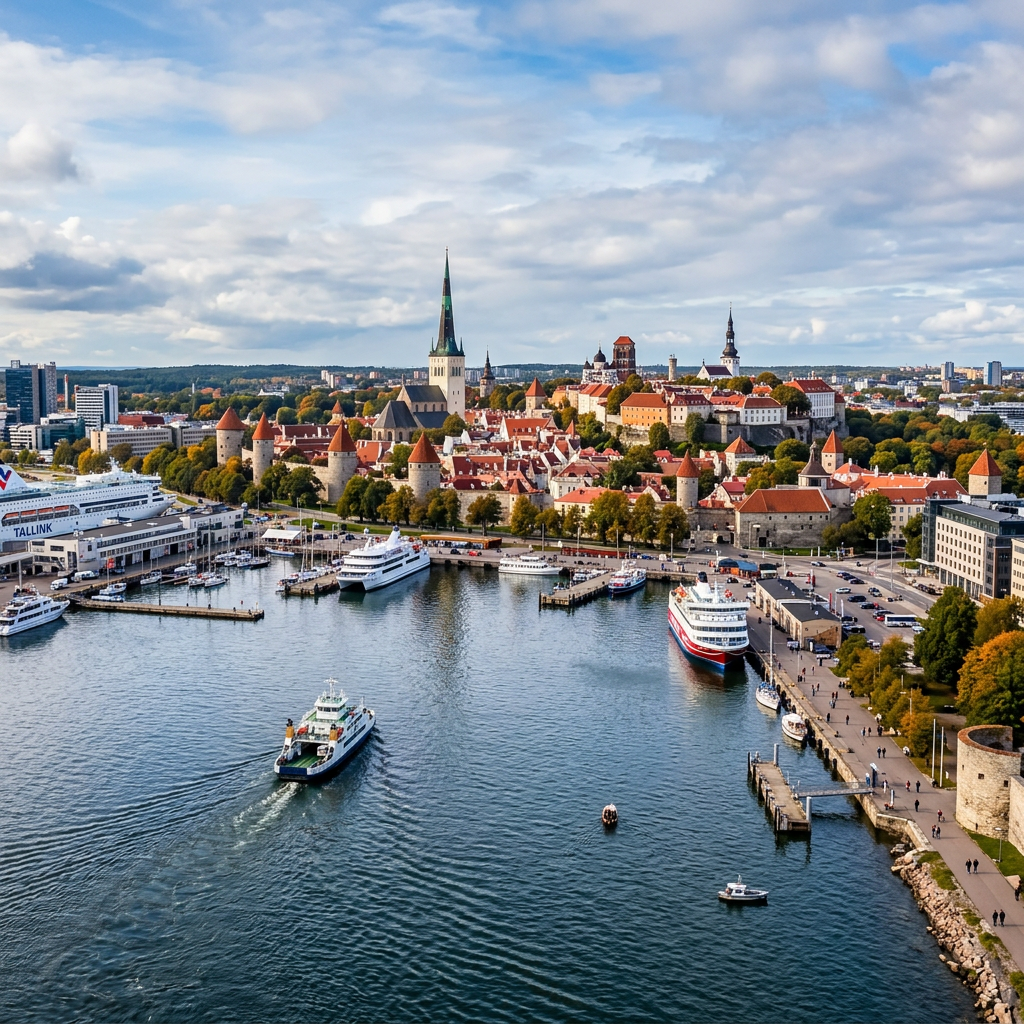
Ten years, three ships, one obsession. I’ve now sailed the Baltic three times, and each trip has been a snapshot of a region in flux — geopolitics rewriting itineraries, cities reinventing themselves, and me, somehow, always finding a new reason to come back. So: was cruise #3 worth it? What should you actually see? Let’s dig in.
How We Got Here: A Decade of Shifting Itineraries
Back in 2016, aboard Celebrity Cruises’ Symphony, the crown jewel of the trip was three days and two nights in St. Petersburg, Russia. The route ran Copenhagen → Stockholm → Visby → Klaipėda → Mariehamn → Helsinki → St. Petersburg → back to Stockholm.
Fast forward to 2022, and I was aboard the inaugural Baltic sailing of the NCL Prima, departing Amsterdam for Estonia, Berlin, Denmark, Sweden, and Finland — St. Petersburg conspicuously absent.
This year, 2026, I sailed the NCL Sun out of Helsinki on a 9-day, port-every-day marathon: Helsinki → Tallinn → Riga → Klaipėda → Warnemünde & Kiel → Gdańsk → Copenhagen. No Russia, obviously — but plenty else to fill the gap.
Helsinki: More Days Than Planned, and Glad for It
A flight change forced extra days in Helsinki before boarding, and honestly? If it’s your first visit, build that in on purpose. Finland’s capital rewards a slow look.
We took the train straight from the airport to the Scandic Grand Central Hotel — central, comfortable, and almost accessible. The catch: no ground-floor entrance, just stairs, plus a genuinely funky freight elevator tucked inside a restaurant that hauls you and your luggage up half a floor to the lobby. We got briefly stuck in it. Not our favorite five minutes. But the staff upgraded our room to make up for it, and the location — steps from a shopping center, pedestrian zone, and a Lidl for cheap water and snacks — made up the rest.


Highlights while we waited for embarkation:
- Helsinki Cathedral and the otherworldly Rock Church, carved straight into granite
- The Olympic Stadium grounds and a rotating cast of museums
- Market Square for craft shopping and local food — yes, I tried the reindeer
- The SkyWheel Helsinki for sweeping port views
- Archipelego Boat Ride around the city harbour
- A surprise Mexican dinner at La Iguana (when you’re from Mexico, you find it wherever you go)
Tallinn, Estonia: A Fairy-Tale Old Town, Minus the Crowds
I’d been before, so this time I booked NCL’s small-group Tallinn Highlights excursion — just 10 people instead of the usual 40-person herd. Worth every extra euro.
Tallinn’s UNESCO-listed Old Town is the draw: cobblestones, cafes, and the 15th-century defensive tower Kiek in de Kök. The 13th-century Gothic Town Hall anchors the main square with a 64-meter spire, and St. Nicholas Church houses centuries of ecclesiastical art.


Stockholm, Sweden: 14 Islands, 57 Bridges, One Very Good City Hall Tour
Another repeat stop, kept simple with NCL’s “Stockholm on Your Own” transfer from the port at Nynäshamn into the city. First stop: City Hall, where the Nobel Prize banquet is held every December and where Sweden’s government still convenes.
From there, the hop-on hop-off bus is genuinely the best way to see it all — City Hall, the Vasa Museum, the ABBA Museum, the noon changing of the palace guard, and the Old Town (Gamla Stan).
Stockholm packs 2.5 million people into its metro area, spread across 14 islands where Lake Mälaren spills into the Baltic — hence the 57 bridges stitching it together. Depending on your cruise line, it might be your embarkation port instead of a stop.


Riga, Latvia: My 103rd Country, and an 825th Birthday Party
Riga was a milestone for me personally — country #103 on my list. The city itself was celebrating its 825th anniversary during our visit, which made the already-stunning Art Nouveau architecture feel even more alive. Because Riga escaped heavy WWII bombing, its UNESCO-listed Old Town is one of the best-preserved in the Baltics. Home to roughly 589,000 people, it’s Latvia’s capital and largest city.


Klaipėda & Palanga, Lithuania: Soviet Concrete Meets Baltic Beach
I’d visited Klaipėda before, so this time we added Palanga to the mix via NCL’s excursion. Lithuania’s third-largest city and only major seaport, Klaipėda dates back to 1252 under the Teutonic Order. Its Soviet-era “gray box” apartment blocks are slowly getting a post-independence facelift — color, design, a visible break from the past.
Palanga, by contrast, is pure beach resort: wide white sand, rolling dunes, and a 1,540-foot pier stretching into the Baltic Sea — an absurdly good sunset spot.


Gdańsk, Poland: Where Solidarity — and WWII — Began
This one was personal: my father’s native country. Sailing into Gdynia, I booked the Highlights of Gdańsk excursion. This is the shipbuilding city where the Solidarity movement launched its uprising against Communist rule, led by future president Lech Wałęsa, who still lives here. It’s also where the first shots of WWII were fired.
Heavily destroyed and painstakingly rebuilt, Gdańsk’s Old Town centers on the Royal Way — a 500-meter cobblestone stretch through Long Street (Ulica Długa) and Long Market (Długi Targ), lined with ornate, colorful merchant houses.


Rostock, Germany: Skipping Berlin for a Local Favorite
Warnemünde is the standard gateway to Berlin, but we’d already made that trip in 2022 — so this time I booked “Best of Rostock” instead, about 30 minutes away. Rostock centers on Rostock University (founded 1419), St. Mary’s Church with its 15th-century astronomical clock, and the lively Neuer Markt square.


Hamburg, Germany: Eight Years Living Nearby, First Time Actually Visiting
Kiel was our jumping-off point for “Best of Hamburg” — and somehow, despite eight years living in Germany, I’d never made it here. Germany’s second-largest city (1.9 million residents) sits at the meeting point of the Elbe, Alster, and Bille rivers, and claims more bridges than Venice, Amsterdam, and London combined. The standout: Speicherstadt, the world’s largest historic warehouse district, built on oak-log foundations with striking neo-Gothic red brick. The Port of Hamburg — Germany’s largest — was also the departure point for countless immigrants bound for the United States from 1814 to 1914.


Copenhagen & the Øresund Bridge: A Detour Into Sweden
We ended in Copenhagen with an overnight before disembarkation, and since it was our second visit, I swapped the usual city tour for NCL’s “From Denmark to Sweden” excursion — a bus ride across the 10-mile Øresund Bridge, the joint Danish-Swedish engineering feat completed in 2000 that turned Sweden’s coastal region into a genuine boomtown.
On the Swedish side:
- Lund — home to Lund University (founded 1666), the largest in Scandinavia with over 45,000 students, and Lund Cathedral, with its 1425 astronomical clock and Sweden’s largest pipe organ
- Malmö — Sweden’s third-largest city, now a hub for biotech and tech startups, anchored by the twisting 190-meter Turning Torso skyscraper
We closed the loop back in Copenhagen with an obligatory photo at the Little Mermaid.


The Verdict
Three trips, three very different Baltics — and I’m still not tired of it. The history stacks up fast here: Hanseatic trade routes, Soviet occupation, Solidarity, Nobel banquets, all within a few hundred nautical miles of each other. I’ll be back.
And if St. Petersburg ever becomes a viable stop again, I’ll be first in line.
If you enjoyed my blog, click here to see many more!

Leave a Reply