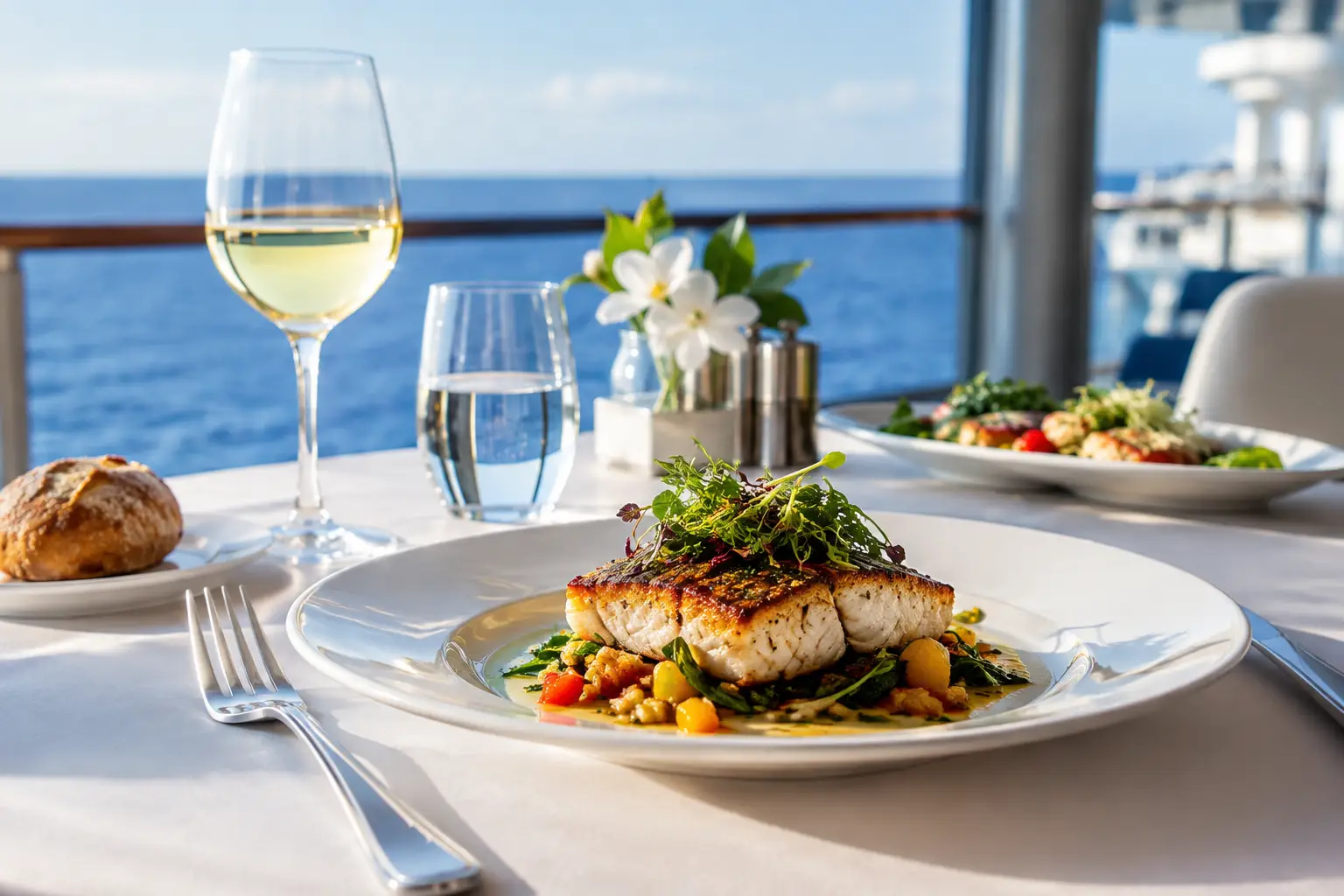
The first time you walk past an NCL specialty restaurant on embarkation day, the package can feel like an obvious upgrade. The dining rooms are busy, the menus look more polished than the buffet, and a multi-course dinner sounds especially appealing after a long travel day. But this NCL specialty dining package review comes down to a less exciting question: will you actually use enough restaurant meals to justify it?
After several Norwegian Cruise Line sailings, I see the package as a good convenience purchase for the right itinerary, not an automatic cruise essential. It can turn dinner into a dependable highlight, particularly for solo travelers and couples who enjoy a leisurely evening meal. On the other hand, it is easy to buy more meals than your schedule, appetite, or ship’s restaurant availability will allow. Luckily due to my status with NCL I automatically received dinners for 2 people and one of them actually includes a bottle of wine. So it is very easy for me to enjoy 6 specialty dining meals on a cruise that is longer than 7 days.
How NCL’s specialty dining package works
NCL sells packages that include a set number of specialty-restaurant meals. The exact number of meals available, package pricing, participating venues, and menu rules can vary by ship, sailing length, and current promotion, so I would always check the details in the NCL app and in your booking before treating any review as a final answer.
In practical terms, you choose a participating specialty venue, make a reservation, and order within the package’s stated allowance. At many restaurants, that generally means an appetizer, entrée, and dessert. Some items, notably premium steaks, seafood, tasting experiences, or select upgraded dishes, may carry an additional charge. Drinks are separate unless you have an applicable beverage package.
That last point matters. A specialty dining package is not a free night out with unlimited food and wine. It is a prepaid restaurant meal plan. Once you view it that way, the value is easier to judge.
What the package does well
The biggest benefit is variety. Norwegian ships can have a surprising range of specialty options, from steakhouses (Cagneys) and Italian restaurants to French bistros (Le Bistro), Japanese (Tappanyaki) venues, barbecue (Texas Smokehouse), and seafood (Ocean Blue or Palomar) concepts. Most recently they have added an Thai (Sukhothai) fusion concept. A week at sea can make even a very good main dining room menu feel repetitive, especially if you tend to dine around the same time each evening.
Specialty dining also offers a calmer pace. The main dining rooms are perfectly workable and included in the fare, but they can be crowded at peak times. A restaurant reservation gives the evening more structure. For a solo traveler, I find that useful: I can choose a time, sit down with a book or chat with the staff, and enjoy a meal that feels intentional rather than like a logistical stop between trivia and a theater show.
The quality difference is real, although it is not dramatic at every venue. In my experience, steakhouse-style restaurants and well-executed Italian or French meals tend to provide the most obvious step up in service, presentation, and atmosphere. The food is not necessarily comparable to the best independent restaurants in Mexico City, New York, or Europe. That is not a fair standard on a large ship. But it can be distinctly better than the included options and well worth having once or twice. As new ships come online, they concepts have increased and some have changed their menu styles. The old La Cucina is now called Onda by Scarpetta which drops more of the traditional Italian dishes for more upscale northern Italy ones. The addition of the Mexican restaurant, Los Lobos is a welcome additional for us because we are coming from Mexico!
There is another advantage for travelers booking a cabin level or promotion that includes dining credits. If the package is part of an offer, your calculation changes. You may only be paying gratuities on the value of the package rather than its full retail price. In that situation, using the included meals is usually sensible, even if you would not have purchased the package outright.
Where the value can disappear
The package is less compelling when your cruise has a port-intensive itinerary. On an Alaska sailing with long port days, a Mediterranean itinerary with late dinners ashore, or a Caribbean cruise where you would rather be at the outdoor deck party, multiple specialty reservations can start to feel like homework.
I would be particularly cautious on cruises of five nights or fewer. There are only so many dinners available, and one of them may be taken by a show, a late return from port, an invitation from new friends, or simple exhaustion. You do not want to be eating a large steak at 9 p.m. just because you have an unused credit.
The package also does not always suit light eaters. Specialty menus are designed around a full dinner experience. If you normally want a salad, a shared entrée, or a casual plate from the buffet after a busy shore excursion, paying for a package can feel excessive. The same is true if you love the included dining room menu or have easy access to Haven dining, where the incentive to seek alternatives is lower.
Availability is the other major trade-off. Popular venues and prime-time tables can book up quickly. This is especially true on newer ships with a high number of guests, during school breaks, and when many passengers receive dining perks through their fare. Booking early helps, but it removes some spontaneity from a vacation. Frequent cruisers can book as early as 120 out from the date you wish to dine.
My NCL specialty dining package review by traveler type
For a first-time NCL cruiser on a seven-night or longer sailing, I would usually consider a modest package of two or three meals if the price is reasonable. That is enough to try the best-regarded venues without turning every night into a reservation. It gives you a steakhouse evening and one meal in a cuisine you do not often have at home, while leaving room for the main dining room, casual food, and port days.
For frequent cruisers, the package makes more sense when you already know the ship and can target specific restaurants. This is where NCL loyalty experience helps. You may know that one venue is consistently excellent, another is mainly about the atmosphere, and a third is not worth using a credit on when an included meal would make you equally happy.
For solo travelers, I lean slightly more positive than I do for families. Specialty dining gives the night a pleasant rhythm, and solo reservations are often easier to find than tables for four or six. Still, I would not book every dinner in advance. A cruise is one of the few trips where an unplanned evening can lead to a conversation in a lounge, a sunset on deck, or a last-minute decision to join a group at the main dining room.
Families need to examine the math carefully. If everyone in the cabin needs a package and younger travelers would rather eat pizza, burgers, or buffet food, the total rises quickly. A better approach may be to reserve one specialty dinner for the adults while the children use the included options, if your family’s arrangements make that practical.
How to get the most from it
Before buying, look at the ship’s restaurant list rather than assuming every Norwegian vessel has the same choices. A package has more value on a ship with several venues you genuinely want to try. Read the menus as well. If the dishes that appeal to you carry supplements, you may be disappointed by the final bill.
Once onboard, reserve your highest-priority restaurant early. Then leave at least one meal credit unplanned if your sailing is long enough. This small bit of flexibility is useful when you discover that you love a certain venue, miss a reservation because of a shore excursion, or simply want an alternative to the busy buffet on a sea day.
I would also avoid treating package meals as a competition. Order what you want, not the most expensive included item simply to maximize theoretical value. Cruise dining is part of the trip, not a spreadsheet exercise. The best meal is often the one that fits your evening, whether that is a polished specialty dinner, a quick plate at the buffet, or room service on a balcony after a full day ashore.
Is it worth buying?
My honest answer is yes for travelers who enjoy restaurant dining, have at least six or seven nights onboard, and can see themselves using every meal without forcing it. It is also an easy yes when the package arrives as part of a promotion and the added cost is limited to gratuities or a modest upgrade.
Pay restaurant by restaurant if you only have one venue in mind, expect to spend several evenings in port, or prefer to decide dinner plans as you go. That approach costs more per meal, but it can cost less overall and preserves the freedom many of us want from a cruise.
A specialty package should make your NCL sailing feel more enjoyable, not more scheduled. Choose it when the restaurants are part of the vacation you are already imagining, then leave enough space for the unexpected moments that tend to become the ones you remember.
Do not forget to check out my other blogs by clicking here!

Leave a Reply