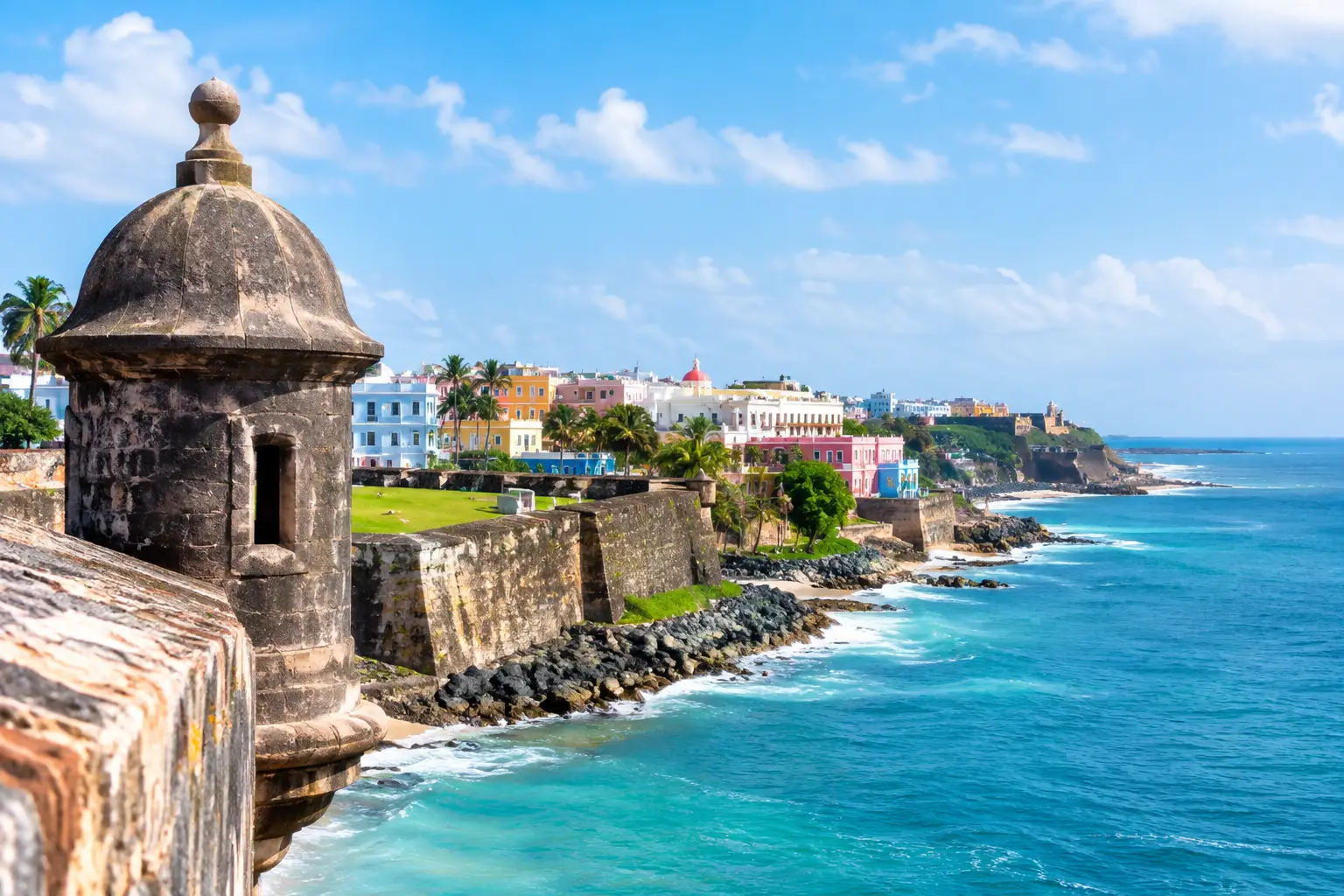
A blue cobblestone street, a rum cocktail sweating in the Caribbean heat, and a massive Spanish fort above the sea: Old San Juan Puerto Rico can feel almost too cinematic at first. It is also a real, compact, hilly city where cruise crowds arrive in waves, afternoon rain can turn sidewalks slick, and the best moments often happen when you stop trying to see every colorful facade.
For travelers coming from Mexico, the mainland United States, or a Caribbean cruise, this is an easy destination to approach independently. You do not need a complicated plan. You do need good shoes, some tolerance for heat, and enough time to experience the neighborhood before and after the busiest hours.
My first recollection of this city was almost 44 years ago, when I worked for Cunard Cruise Lines and our home port was Old San Juan. Obviously it has changed drastically including the new cruise ship port on the other side of the bay. The cruise offered a free shuttle service for early arrivals and that was a nice way to explore the area.
Why Old San Juan Puerto Rico Is Worth Your Time
Old San Juan is one of those rare historic districts that works at several speeds. You can walk through it in a few hours from a cruise port, spend a long weekend based inside its colonial walls, or use it as the beginning of a wider Puerto Rico trip. The old city is small, but it does not feel like a museum set. Residents still live here, schoolchildren pass through the plazas, and bars fill with locals and visitors after dark.
The visual appeal is immediate. Buildings are painted in mango yellow, faded pink, turquoise, and deep blue. Wrought-iron balconies overflow with plants. Beyond the streets are the walls, gates, and forts that explain why Spain defended this harbor so fiercely for centuries.
But the appeal is not only visual. Old San Juan rewards travelers who like to wander without a strict agenda. I have found that this kind of destination is especially comfortable for solo travelers because there is always a natural next stop: a plaza bench, a coffee counter, a small gallery, a historic chapel, or a viewpoint over the water. You are not stranded without a plan, but you are not locked into one either.
Start With the Forts, Then Let the Streets Lead You
If you have only one full day, start early at Castillo San Felipe del Morro, usually called El Morro. Its position at the northwest tip of the old city is spectacular, looking across the Atlantic and toward the entrance to San Juan Bay. Give yourself time to walk through the different levels rather than treating it as a quick photo stop. The tunnels, ramps, sentry boxes, and broad grassy field make the scale of the place clear.
From there, walk east along the city walls toward Castillo San Cristóbal. The route itself is part of the experience. You will pass coastal views, old gates, and streets that become more residential once you move away from the central shopping blocks. San Cristóbal is often less crowded than El Morro, but it is enormous and deserves at least as much attention. If military history is not your main interest, choose one fort and save your energy for the city. In the Caribbean sun, trying to do everything can become a chore.
Between the two forts, make room for the smaller landmarks. Paseo de la Princesa is a pleasant promenade near the waterfront, especially later in the day. La Fortaleza Street is one of the most photographed streets, though it can feel congested when ships are in port. The Catedral Basilica Menor de San Juan Bautista offers a quieter pause from the heat and crowds.
The best strategy is to use major sights as anchors, not obligations. Turn down streets that look interesting. San Sebastián, Sol, Cristo, and Fortaleza all have their own personality, and the blocks between them are where Old San Juan feels most personal.
A realistic walking plan
Begin around 8:30 or 9:00 a.m., before the heat builds and before many cruise passengers spread through town. Visit a fort first, then work back through the streets for lunch. Use the early afternoon for a long meal, a museum, or time at your hotel. Return outside around 4:30 or 5:00 p.m., when the light softens and the day-trippers begin to disappear.
That break is not laziness. Old San Juan is steep in places, and its blue-gray adoquín cobblestones are uneven. Sandals may look right in photos, but supportive walking shoes are the better choice. After rain, take the slopes slowly.
Cruise Day or Overnight Stay? The Difference Matters
Old San Juan is among the easiest Caribbean cruise ports because the ships dock steps from the historic district. If you are sailing into San Juan, you can walk off the ship and be in the old city within minutes. That convenience is excellent, but it also means the central streets can be crowded from late morning through mid-afternoon.
For a port day, resist the urge to book a complicated excursion unless you specifically want beach time or a rainforest visit. A self-guided walk through Old San Juan is more rewarding than rushing between distant attractions. Start with a fort, have a proper Puerto Rican lunch, and leave a margin of time to return to the ship. The sun and a few unexpected shopping stops can make distances feel longer than they look on a map.
An overnight stay is a different experience entirely. Once the ships sail away, the neighborhood becomes calmer, more romantic, and easier to photograph. Restaurants remain lively, but the mood shifts from sightseeing to evening conversation. If your schedule allows, I would choose at least two nights inside or just outside the old city rather than treating San Juan only as a cruise turnaround port.
Hotels within the historic district provide atmosphere and walkability, though rooms can be smaller and street noise can be real. Properties in Condado or Isla Verde generally offer more resort-style space and easier beach access, but they require a ride into Old San Juan. Neither choice is wrong. Stay in the old city if history, dining, and evening walks are your priorities; choose the beach districts if you want more time by the water.
Eat Well Without Chasing Only the Famous Places
Puerto Rican food deserves more attention than a hurried stop for a piña colada. Look for mofongo, a savory dish built around mashed fried plantains; pernil, slow-roasted pork; tostones; and seafood prepared simply with local flavors. A good meal in Old San Juan can be formal or completely casual, and the casual spots are often where you get a better sense of daily life.
The famous bars and rum drinks are part of the experience, and there is no reason to avoid them. Just do not let a checklist of famous names dictate the day. In a compact historic district, the place with an open table, a welcoming counter, and a menu that genuinely appeals to you may be the better choice.
For solo travelers, eating at the bar is often ideal. You can have a full meal without feeling like you are taking up a large table, and conversation comes more naturally if you want it. Puerto Rico is a U.S. territory, English is widely spoken in visitor areas, and the U.S. dollar is used, which removes a few friction points for American travelers. Still, a little Spanish goes a long way and is always appreciated.
Practical Details That Make the Visit Easier
San Juan is hot and humid much of the year. Carry water, wear sunscreen, and do not underestimate how quickly the midday sun drains your energy. A compact rain jacket or umbrella is worthwhile because showers can arrive suddenly, especially in wetter months.
Rideshare services and taxis are useful for airport transfers and trips between Old San Juan, Condado, and Isla Verde. Once inside the old city, walking is usually better than trying to navigate narrow streets by car. If mobility is a concern, plan fewer hills and use rides strategically, because the fort areas and cobblestones can be challenging.
Safety is similar to any popular urban destination: stay aware of your surroundings, keep valuables close in crowded areas, and avoid displaying more than you need to. I would be comfortable walking around the central historic district in the evening, especially where restaurants and people are present. Solo travelers should still use normal judgment after dark and arrange transportation rather than walking far beyond the active areas.
Travelers flying from Mexico may find the routing easiest through Mexico City or a major U.S. gateway, depending on fares and schedules. If you are connecting through the United States, remember that Puerto Rico follows U.S. entry rules. Build in enough connection time, particularly when combining separate tickets.
Old San Juan does not need to be conquered. Give it one early morning, one unhurried afternoon, and one evening when you can hear the city after the cruise crowds have gone. That is when its history feels less like a backdrop and more like a place you were lucky enough to enter.
Remember to check out all my blogs right here!
Leave a Reply