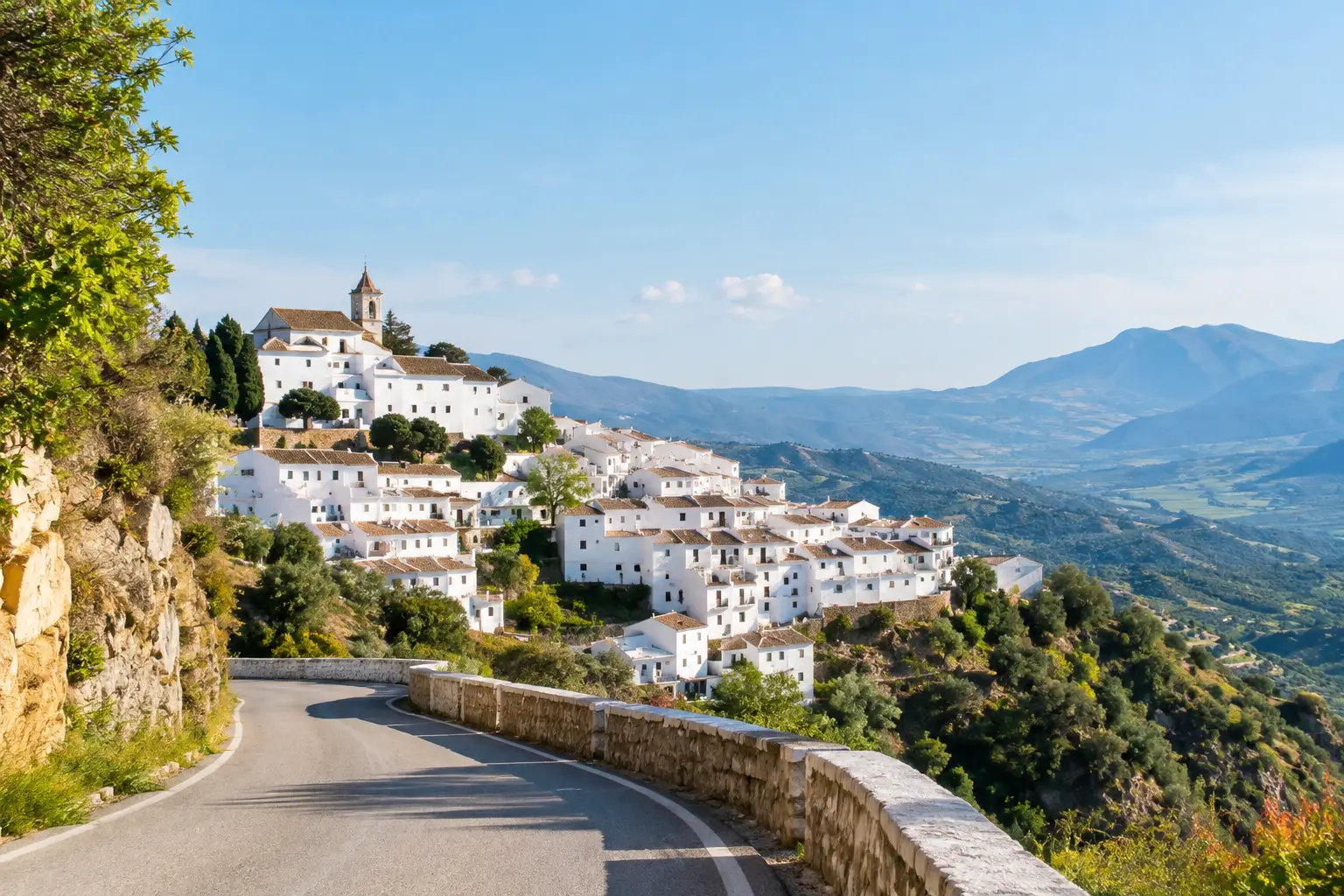
The white villages north of Cadiz are the kind of places that make a rental car feel like part of the trip rather than simple transportation. One minute you are driving through open Andalusian farmland, and the next a cluster of whitewashed homes appears high on a ridge, wrapped around a church tower or an old castle. The views are memorable, but the slower rhythm is what stayed with me most: coffee in a quiet square, laundry hanging from balconies, and streets too narrow for anything larger than a compact car.
Known as the Pueblos Blancos, these villages sit between the province of Cadiz and the mountain country leading toward Malaga. They are easy to underestimate on a map. Distances are short, but the roads curve through hills, parking can take patience, and each village deserves more than a quick photograph from a roadside overlook.
How to plan the white villages north of Cadiz
For most independent travelers, a car is the right answer. Public buses connect some towns, but schedules are not designed for a flexible village-hopping itinerary, especially if you want to visit smaller places or stop at viewpoints. From Cadiz city or Jerez de la Frontera, I would allow at least two nights. Three is better if you want unhurried meals, a hike, or time to enjoy the villages after the day-trippers leave.
A practical route begins in Arcos de la Frontera, then heads east toward Zahara de la Sierra and Grazalema. From there, continue to Setenil de las Bodegas and Olvera, or loop back toward Jerez depending on your next stop. Ronda is often included on Pueblos Blancos itineraries, and it is absolutely worth visiting, but it is in Malaga province rather than Cadiz. Add it if your route continues east, not because you feel obligated to tick off one more famous town.


Choose the smallest rental car that will comfortably hold your luggage. This is not the place to be overly loyal to a large SUV. Historic centers were built long before modern traffic, and some lanes are more stressful than scenic. I normally leave the car in an outer public lot and walk uphill rather than trying to follow a navigation app into the oldest quarter.
Five villages worth building into your route
Arcos de la Frontera for a dramatic first stop
Arcos is one of the most accessible white villages from Jerez and makes a logical starting point. Its old town sits above a dramatic cliff, with winding lanes leading toward the Basilica of Santa Maria de la Asuncion and several viewpoints over the Guadalete valley.
It can feel busy in the middle of the day, particularly in peak season, but staying overnight changes the experience. Once tour groups leave, the streets become quieter and the sunset light on the white facades is reason enough to linger. The trade-off is that Arcos is steep, and travelers with mobility concerns may find a hotel outside the old center more comfortable.
Zahara de la Sierra for the view
Zahara is the village I would prioritize if you only have time for one truly elevated viewpoint. The town rises below the remains of a Moorish castle, looking out toward a blue reservoir and the surrounding mountains. It is compact, beautiful, and ideal for a slow wander without a rigid sightseeing plan.
The climb to the castle is short but uphill, and summer heat can make it feel much longer. Go early or late in the day, carry water, and do not expect every restaurant to keep big-city hours. That is part of the charm, but it requires a little planning.
Grazalema for mountain air and a longer stay
Grazalema feels different from the villages perched on exposed ridges. It sits in a greener mountain setting within the Sierra de Grazalema Natural Park, where the air can be noticeably cooler than in Cadiz or Seville. Its white houses, red-tiled roofs, and small central plazas are lovely, but the surroundings are the main draw.
This is the best base for travelers who want to add nature to the itinerary. There are hiking opportunities in the area, though some routes require advance permission or have seasonal restrictions. Even without a serious hike, the drive into Grazalema is one of the highlights of the route. Take it slowly, particularly after rain, when curves and limited sightlines demand more attention.
Setenil de las Bodegas for something genuinely different
Setenil is not simply another whitewashed hill town. Its most memorable streets are built beneath enormous rock overhangs, with cafes, homes, and shops tucked directly under the stone. Calle Cuevas del Sol and Calle Cuevas de la Sombra are the obvious places to see, but they are worth it because the setting really is unusual.
Setenil is also a good lunch stop. Arrive before the Spanish lunch rush if you want a table outside, then wander uphill away from the cave streets for a broader view of the town. It can be visited in a couple of hours, although the drive and parking may take longer than expected on a busy weekend.
Olvera for a quieter finish
Olvera is sometimes skipped in favor of the bigger names, which is exactly why it can be rewarding. The village has a handsome church and castle at its summit, plus sweeping views from the surrounding hills. It feels more lived-in than polished, and that is a strength if you prefer places that have not been styled entirely for visitors.
It also works well for travelers interested in cycling. The Via Verde de la Sierra, a former railway route, begins nearby and offers a gentler way to see the countryside. You do not need to be an avid cyclist to enjoy this part of the region, but it is wise to check weather conditions before committing to a long outdoor day.
Timing, meals, and the realities of driving
Spring and fall are the sweet spots for this road trip. April, May, late September, and October usually offer pleasant temperatures for walking, with greener scenery than high summer. July and August bring long, bright days, but midday heat can flatten your enthusiasm for uphill lanes and castle climbs. Winter has fewer visitors and a moody beauty, although rain, cooler evenings, and shorter daylight hours make the roads feel less forgiving.
Spanish meal times matter here. Many kitchens do not begin serving dinner until 8:00 or 8:30 p.m., and smaller villages may have limited options on a quiet weekday. I would book accommodation with breakfast, keep snacks in the car, and treat lunch as the main meal of the day. If you are traveling solo, sitting at a bar for tapas is often easier and more sociable than requesting a table for one in a formal dining room.
Do not plan to drive every village road after dark. The main routes are manageable, but mountain sections have sharp turns, limited shoulders, and occasional cyclists or livestock. Daylight driving is more enjoyable anyway, since the landscape is part of what you came to see.
Why this route works well for solo travelers
I have found Andalusia to be an easy place to travel independently, and the white villages are no exception. You can set your own pace, stop when a view deserves it, and spend as much time as you want in a plaza without negotiating a group schedule. English is less common than in Seville, Madrid, or Barcelona, but basic Spanish and a friendly approach go a long way.
The one limitation is that solo travel here can be more expensive if you rent a car alone. That cost is real, but it buys flexibility that buses simply cannot match. If your budget is tight, base yourself in one village for two or three nights rather than changing hotels daily. Grazalema is a strong choice for scenery, while Arcos is more convenient for arriving from Jerez or Cadiz.
Leave space in the itinerary for the unplanned moments: a bakery counter full of local pastries, a quiet bench above the valley, or a village square that looks best when you have nowhere else to be. The white villages reward travelers who slow down enough to let the route, not just the checklist, shape the day.
If you enjoyed my latest travel blog, click here for more!
Leave a Reply