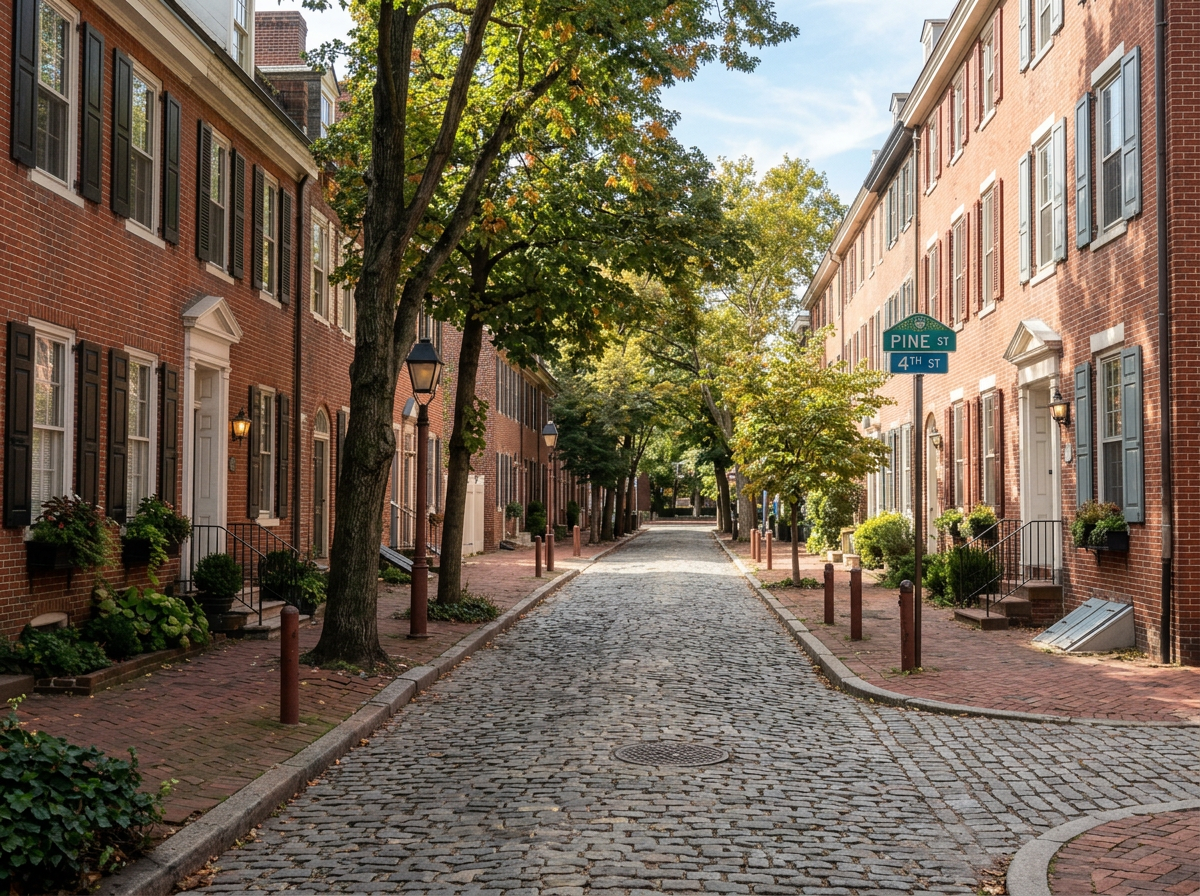
Philadelphia is one of those American cities that can feel strangely familiar before you arrive. You know the Liberty Bell, the Rocky steps, the cheesesteak debate, and perhaps the broad red-brick sidewalks from a movie scene. But the real pleasure comes when you stop treating the city as a checklist. Give it three or four nights, walk more than you think you should, and let its neighborhoods set the pace.
For travelers coming from Mexico, Philadelphia makes a strong long-weekend stop or an easy addition to a larger Northeast trip. Connections through Mexico City and major US hubs can be practical, but I would compare the total itinerary rather than simply choosing the shortest connection. My travels take me here as I leave a cruise ship in the brand new PhilaPort coming from Europe. As it is my first time in this historical city, so I plan to spend a few days before my early departure back to Mexico. An early arrival is valuable here. This is a city that rewards a full afternoon on foot.
Why Philadelphia Works for Independent Travelers
Philadelphia has the density and cultural weight of a major East Coast city without making every day feel like a logistical operation. Center City is compact, several major sights sit within reasonable walking distance, and the street grid is easy to understand. That matters when you are traveling solo and want the freedom to change your plans without spending half the day in transit.
It is also a city where you do not need to fill every hour. A morning at a museum, a long lunch in Reading Terminal Market, and an evening walk through Rittenhouse Square can make for a satisfying day. There is enough history to keep first-time visitors busy, but the better moments often happen away from the headline attractions: a quiet residential block in Society Hill, an unexpectedly excellent coffee shop, or a corner bar where nobody is in a hurry.
The trade-off is that Philadelphia can feel rougher around the edges than Boston or Washington, DC. Some blocks change character quickly, and like any large American city, situational awareness matters at night. I would not let that discourage a solo traveler, but I would choose my hotel location carefully and avoid treating every neighborhood as interchangeable.
Where to Stay in Philadelphia
For a first visit, Center City is the simplest choice. It puts you near City Hall, Reading Terminal Market, Rittenhouse Square, and the historic district, while giving you a wide selection of restaurants and public transportation. If the budget allows, Rittenhouse Square is particularly pleasant. It feels polished without being sterile, and it is a comfortable neighborhood to return to after dinner. I decided to stay at the Society Hill Hotel, a well located hotel, therefore a more expensive choice.
Old City is the logical base if American history is the main reason for your trip. You can walk to Independence Hall and the Liberty Bell early, before larger crowds arrive, then continue toward the Delaware River. The downside is that Old City can be quieter at night and is a bit removed from some of Center City’s better dining areas.
I would also consider Washington Square West, especially for solo travelers who want a lived-in neighborhood feel while staying central. It has restaurants, good coffee, and easy access to the subway. What I would not do is book solely on the lowest hotel rate near the airport or far north of Center City. Saving money on the room can cost you time, flexibility, and the pleasure of being able to walk home after an evening out.
Start With History, Then Move Beyond It
The Independence National Historical Park area deserves a visit, even if you are not usually drawn to historic sites. Independence Hall has a specific sense of place that is difficult to get from a textbook, and seeing the Liberty Bell is worthwhile if you time it well. Go early in the morning or later in the afternoon. Midday lines can make a brief stop feel longer than it needs to be.
From there, keep walking through Old City rather than jumping into a rideshare. Elfreth’s Alley is small but atmospheric, and the surrounding streets make a better impression when you view them as part of a real neighborhood rather than an isolated photo stop. The Museum of the American Revolution is another strong choice if you want context beyond the familiar founding-era stories.
Then give yourself permission to leave history behind. Philadelphia is not a museum city frozen in 1776. Its identity is also shaped by immigration, universities, sports, music, food, and deeply local neighborhood loyalties. The city becomes much more interesting once you stop expecting every block to look colonial.
The Philadelphia Museums Worth Your Time
If I had to choose one museum for a first-time visitor, I would pick the Philadelphia Museum of Art. Yes, the steps are part of the experience, but the collection is substantial enough to justify several hours inside. The building overlooks the Schuylkill River and Fairmount Park, so it is easy to combine with a walk rather than treating it as an all-day indoor commitment.
The Barnes Foundation is a more personal and unusual experience. Its densely arranged rooms do not follow the conventional museum formula, and that is exactly why it stays with people. If you enjoy Impressionist and post-Impressionist art, it should be high on your list. Timed entry is sensible, particularly on weekends.
For something completely different, the Eastern State Penitentiary offers a haunting and thoughtful visit. Its decaying cellblocks are visually striking, but the stronger part is the discussion around incarceration and punishment in the United States. It is not light sightseeing, yet it adds perspective to a city break that might otherwise become all food and famous landmarks.
Eat Broadly, Not Just for Cheesesteaks
A cheesesteak is part of the Philadelphia experience, and I see no reason to pretend otherwise. But it is one meal, not the entire culinary identity of the city. The more memorable approach is to treat Philadelphia as a place to graze across different neighborhoods and traditions.
Reading Terminal Market is an excellent starting point, particularly if you have just arrived and want options without a formal reservation. It can be crowded, so go with patience and avoid peak lunch time if possible. Try a Pennsylvania Dutch baked good, a roast pork sandwich, or something you would not normally order. The market works best when you accept that it is busy, loud, and full of people making decisions slowly in narrow aisles.
For dinner, make at least one reservation in the Italian Market area, East Passyunk, or around Rittenhouse. The city has serious Italian food, but it also has outstanding Vietnamese, Indonesian, Mexican, Ethiopian, and Middle Eastern options. Travelers from Mexico may find it especially interesting to compare the local Mexican restaurant scene with what they know at home. Some places aim for regional specificity; others are built around the Americanized comfort-food side of the cuisine. Both can be enjoyable, but they are not the same thing.
And order a soft pretzel from a street vendor at least once. It is inexpensive, very local, and best judged with modest expectations.
A Sensible Three-Day Philadelphia Plan
On your first day, settle into Center City, visit Reading Terminal Market, walk past City Hall, and spend the evening around Rittenhouse Square. This is the day to get your bearings rather than racing toward every major sight.
Use day two for Old City. Start with Independence Hall and the Liberty Bell, then continue through the historic streets and choose one major museum. Finish with dinner in South Philadelphia or East Passyunk, where the city feels more residential and less staged for visitors.


On day three, head toward the Benjamin Franklin Parkway for the Barnes Foundation or Philadelphia Museum of Art. Afterward, walk along the river if the weather cooperates. If you have a fourth day, that is when I would add Eastern State Penitentiary, explore Fishtown, or simply revisit the neighborhood that felt most like your kind of place.
Small Things That Make the Trip Easier
Philadelphia is walkable, but weather changes the equation. Summers can be hot and sticky, while winter winds can make a short walk feel much longer. Spring and fall are the most forgiving seasons for a first visit, although popular weekends bring higher hotel prices and more competition for dinner reservations.
Use the subway and buses when they make sense, but do not be overly ambitious about covering distant neighborhoods in one day. A city break becomes less enjoyable when every meal requires a complicated cross-town trip. I usually choose one area for the morning and another nearby area for the afternoon, leaving space for an unplanned stop.
For solo travelers, Philadelphia is a good place to practice being comfortable with your own company. Sit at the bar for dinner, take your time in a museum, and do not assume a quieter evening means you are missing out. The city has enough character that you will rarely feel alone in a negative way.
Philadelphia is at its best when you leave room for that extra block, that second coffee, or the museum gallery you nearly skipped. The famous sights will still be there, but the city becomes memorable in the time between them.
Remember to check out my other blogs!
Leave a Reply